Showing posts with label Judeo-Christian. Show all posts

Thursday, December 23, 2010

Professor Ikonophil Metropolitan, Part I.

Image is Everything...

- A Famous American Nike Commercial


Part I. Seeing Eye to Eye about the Judeo-Christian Tradition


This is not a Cornerstone, it is a Capstone. This is not the eye of God because the Judeo-Christian God did not build any gigantic pyramids and was not Egyptian. God's Angels spoke Hebrew. This means Up, Above, Top, Over, North, etc. All of this is the Capstone, the apex, of a building, not a Cornerstone which has always been located somewhere near the bottom and looked upon as an underlying part of the foundations.


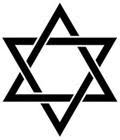
This is not a Capstone, it is a Cornerstone, what some have referred to as the legendary Philosopher's Stone of the Foundation of the World, the Rock of Ages. It is nearly always below a building, or structure, while the Capstone lies above. This too is not the eye of God because the Judeo-Christian God did not hide like a coward beneath an upside-down pyramid when His people, the Israelites, were being murdered and enslaved by the Pharaoh. Instead, he sent ten horrific plaques and mighty cursings against the Egyptians as an initial retaliation until they agreed to set His people free once again. Sometimes in close connection to the Capstone seen above, this particular Ikon also happens to be a symbolic representation of many different, and highly important, Judeo-Christian Biblical principles, ideas, and doctrines. Combined together with the Capstone, this particular insignia becomes the Star of David, The Joshua (Jesus) Star. In short, the Cornerstone means Down, Beneath, Bottom, and Under.

____________________________________________________

THE QUESTION- Which Symbol represents 666 and/or 999?

Here is a tentative understanding-

Three Eyes Above the Pyramid would be 666.

666 is the Number of the Beast on Earth

______________________________________

Three Eyes Below the Pyramid would be 999

999 is the Number of the Beast in Heaven


___________________________________________________

As just described, the Number of the Beast on Earth is 666, while in Heaven it is just the opposite 999. A long, long time ago, the Star of David (A Symmetrical Combination of Both Symbols) was created and utilized, as it still is today, by Judeo-Christian Angels and their rebel Hebrew allies, in order to confuse the Beast and his perfect, totalitarian identification system of control. The Star of David is the mark of a man, not an Angel, who without a God-given soul is simply .666 (Mind, Body, No Soul) rather than .667 (Mind, Body, and Soul).


On Earth, the Mark, not the Number, but the Mark of the Beast is, in fact, 999 (a Cornerstone) because it stands for .999, a repeating numerical ratio slightly less than 1, the number of the individual soul. This is because anyone who ever agrees to endure a mark, a tattoo, on their forehead and right hand is a little less than an individual person and a whole lot more like the material possession of a tyrannical cattle-owner who brands all his property with his personal seal (like something Cain would do, not Abel). Nevertheless, the Mark of the Beast as seen in the Judeo-Christian Kingdom of Heaven continues to be the traditional 666 (a Capstone), a reality completely inverse to that of Earth- 999 upside down, literally.


The Mark of the Beast

OLD TESTAMENT: So the LORD put a Mark on Cain, lest anyone should kill him at sight. (Genesis 4:15)

NEW TESTAMENT: It forced all the people…to be given a Mark on their right hand or their forehead, so that no one could buy or sell except one who had the Mark of the Beast. (Revelation 13:16-17)


____________________________________________

The Number of Beast

OLD TESTAMENT: The number of gold pieces that Solomon received every year weighed 666 gold talents. (I Kings 10:14)

NEW TESTAMENT: This calls for wisdom: let anyone with understanding calculate the Number of the Beast, for it is the Number of a Man. His number is 666. (Revelation 13:18)


_________________________________________________

Topic ----- Eye Above __________ Eye Below

Standard: Above standard -------- Below standard

Technology: High tech ------------- Low tech

Internet: Log on-------------------- Log off

Urban: Uptown -------------------- Downtown

Class: High class ------------------ Low class

Greetings: What’s up? ------------- What’s going down?

Self-control: Lighten up ----------- Calm down

Patience: Wait up! ----------------- Slow down!

Qualify: Above all, it was wrong -- At bottom, it was wrong

Number: 666 ---------------------- 999

______________________________________________________

THE ANSWER- The House of David shall rule the world forever...

You will do as the LORD Your God has commanded you. You shall not turn aside to

The Left Hand or...

...to the Right Hand.

You will never again turn aside unto crooked paths for all the rest of eternity.

May the LORD God bless you in the name of St. Judas Maccabaeus.


Jason Nicholas Korning

Saturday, November 6, 2010

Neoliteralism, a 21st Century Theology


Neoliteralism, the Cornerstone of Judeo-Christian Theology

Today, there are a countless number of methods along with differing schools of thought when it comes to Bible Studies and Theology. At least some astute observers might say there are already far too many, with each 'method' or 'school' contradicting another so that these traditionally Christian fields of study have become nothing more than a 'Mystery Babylon' intellectual enterprise. Obviously, adding yet another catchy term to the list would seem to be compounding the problem, rather than providing a solution. Nevertheless, the project of Neoliteralism, a new term for a new scholarly outlook, has only one intent and that is simplification. Neoliteralism, as the word implies, presumes to take the Bible literally, but it also includes a basic understanding of what the Bible represents. This understanding is simple, not complex, and general, rather than specific. Thus, a perfect example of Neoliteralism can be seen in the following comments and remarks:

I. The Holy Bible is the most published, read, studied, documented, analyzed, interpreted and discussed book ever known in the history of the world.
II. The Holy Bible is currently available in more alphabets, languages, and versions which are spoken and written by more ethnicities and cultures than any other book on earth today.
III. The Holy Bible is the the single most influential book underlying the development of nearly all the written languages still used on earth today.
IV. The Holy Bible is the official text of Christianity, the largest religion with the most followers in the entire world.
V. The Holy Bible is the cornerstone of monotheism, represented by the three great religions of Judaism, Christianity, and Islam.
VI. The Holy Bible is the chronological story of a single family's relationship with a specific supernatural entity that began in 3760 B.C. with Adam and ended with Joshua ben Joseph (Jesus) in 33 A.D.
VII. The Holy Bible is the most powerful piece of literature in the modern world that has inspired, motivated, and influenced more individuals to think and act in more ways than any other written document in the history of the world.

Even if the simple generalizations just mentioned may appear controversial to some readers, each one of them is not only true, but a scientific fact that cannot be denied or dis-proven. In other words, Neoliteralism is willing to make ample use of the Statistical Sciences in order to further its primary agenda, simplicity. Is simplicity an objective goal? Is simplicity biased or politically motivated? The answers to both of those questions depend on the assumptions of what simplicity will do to the fields of Theology and Religious Studies. Put bluntly, there is an infinite number of ways of interpreting Neoliteralism's emphasis on simplicity. The non-believer might suspect that it is simply a code word for fundamentalist Christianity intent on quashing complex, sophisticated dissent of traditional Biblical belief systems. On the other hand, the believer may mistake simplicity as either an attempt to water down or dilute Christian truth or an absurd strategy to tear down the Church which has been built upon a continuing accumulation of scholarship compiled and studied throughout the centuries.


In other words, religious scholars may well be skeptical of this new contraption, this intellectual tool known as Neoliteralism. All things considered, they have every right to be. Indeed, for most readers this is the first mention of the word Neoliteralism. This original piece of jargon could end up being nothing more than another case of self-promotion. Theologians and Religious Scholars, just like nearly everybody in today's world, crave attention. They crave readers, listeners, endowments, large offices, and higher salaries. For some, the spread of Christian intellectual truth is also a strong underlying motivation.


With that in mind, Neoliteralism must be honest with itself and with others about what the term really means. This includes the inventor of the word and author of this essay. In other words, who is the man behind the curtain pulling the strings of Neoliteralism? Well, for starters, Neoliteralism is obviously a self-interested attempt to be different. Are not all 'methods' and 'outlooks' found in Theology the same way? Of course they are. Theologians, like all intellectuals, entered the field out of a desire to have their religious ideas read and listened to by others. Assuming the factor of self-interest remains, here are the basic, and specific, agendas underlying Neoliteralism.

I. Neoliteralism is Catholic: Catholic Christianity is emphasized because it is older and has more adherents than Protestantism. The reason is simple, St. Peter was specifically chosen to be the leader by Joshua (Jesus) (NOTE: the author of this essay is a practicing Roman/Ukrainian Catholic scholar.)
II. Neoliteralism is Judaic: Athens, Greco-Roman Philosophy, and Hellenism are ignored in favor of Jerusalem, Mysticism, and Judaism. The reason is simple, Joshua (Jesus) was and is a Jew.
III. Neoliteralism is Iconoclastic: Extreme anti-Christian sentiments and assumptions found in the visual arts proves their inherently Pagan and demonic tendencies. The reason is simple, God prohibited the graven image as one of the Ten Commandments
IV. Neoliteralism is Scientific: Darwin's Theory of Evolution is losing ground due to scientific dissent among experts. Natural law is concurrent with biological behavior of other mammalian species.
V. Neoliteralism is Evangelical: The continued popularity of the Bible, of Christianity, and their combined historical influence clearly indicates supernatural forces that cannot be explained scientifically. The probability of Christianity's success and the Bible's best-selling status are statistically impossible. Judeo-Christian theology is a statistically significant reality.
VI. Neoliteralism is Judeo-Christian: Numerous sayings and parables found in the Gospels have exact parallels in the Talmud, the Apocrypha, and in modern Orthodox Judaism.

VII. Neoliteralism is a Catholic, Judaizer, Iconoclast, Scientist, Evangelist, and Judeo-Christian.

Honesty should not condemn a new idea, theory, or paradigm. In short, these particular aspects of Neoliteralism cannot, and should not, disqualify it from being taken seriously. No type of Theology can ever be objective due to the pre-existing preferences of their creator or inventor. Most importantly, the above statements of subjectivity represent a key component in Neoliteralism. How so? By admitting the simple, unspoken truth of Theology and Biblical Studies. Rather than remain in denial, Neoliteralism simply accepts the reality of dualism embedded in the historical differences of Judeo-Christian thought.


Sometimes, like a coin with only two sides, objective study of these differences is impossible to achieve. Buddists, Hindus, Muslims, even nonbelievers and Pagan, are either Catholic or Protestant because, regardless of their personal faith, they will always prefer one over another. This understanding is also true concerning the traditional Christian stereotypes which have, at times, erupted into violent opposition. Historically speaking, the Glorious Revolution of England and the Iconoclasm Rebellion of the Byzantine Empire are perfect examples of ideas armed with swords. Everyone, including every theologian is, in the end, either a Judaizer or a Hellenizer, an Iconophil or an Iconoclast, an Artist or a Scientist, who is Private or Evangelical about being Christian or Judeo-Christian. To summarize, Neoliteralism is brutally honest about its intentions of being barbarically simple about Theology and Biblical Studies. Complexity and sophistication are both acceptable, but there must be balance instead of a one-sided journey into obscurity and obsolescence.


May the LORD God bless you in the name of St. Judas Maccabaeus.


Jason Nicholas Korning

Friday, October 1, 2010

Martin Luther's Broken Hammer

St. Peter's Cross, Part V.

You are Peter, and upon this Rock I will build my Church and
the Gates of Hell will not prevail against it.

- Matthew 16:18


The Maccabee Steps in Jerusalem


Martin Luther's Hammer Missed the Nail at the Gates of Purgatory

Ironically, Protestant mythology never ceases to emphasize how Brother Martin Luther triumphantly left the monastery after 'nailing' his 95 theses to the door of his cell. Today, one finds that, especially in this country, the United States, the vast majority of Protestants follow Luther in their theology and doctrine. Amazingly, their emphasis on Scripture (Sola Scriptura) and Justification by Grace alone stem directly from Luther, completely ignoring the deeply Catholic tradition that England created for themselves by their simple, basic imitation of the Roman Church using English as the primary language.

This has resulted in a situation that many people, without finding the words to express them, find to be fanatically dualistic and extremist. All things considered, it seems quite logical to conclude that the roots, the deeply-embedded source, of this American extremism (Gay Marriage, Abortion, Euthanasia, Sex Education) is to be found in a single word- Purgatory. Yes, Purgatory that bland, boring, old-fashioned, passe', topic which, in reality, makes all the difference in the world. The common folklore that almost everyone is going to Purgatory immediately after death has been passed on from the first Jewish-Christians of the 1st Century A.D. to the European Gentile Crusaders of the 11th Century to the Kindergarten classrooms of the late 20th Century where a stern Polish nun told our class the exact same thing. Personally, I believe it is Purgatory alone that will save Christianity from extinction in the modern world, especially among the English-speaking chattering classes.


The Cross of St. Peter's

The Protestants, most especially among the much-despised 'Christian Right' refuse to budge, almost as if Luther still has a stranglehold upon the entire movement. This is from a Protestant website: 'The doctrine of purgatory developed in the late patristic and early medieval periods.'

Current historical research, along with a lot of common sense, now tells a different story. The concept of a dark, underground world of ghosts where the dead await God's judgment and eventual salvation is as old as Abraham who 'gave up the ghost, and was gathered to his people' and has continued, non-stop, as both Scripture and folk-lore ever since. Originally called 'the Sheol' this God-given Underworld was never Hell, as many Protestants now claim, but a calm, resting abode for the spirits of dead ancestors who no longer had access to material bodies. Here's just a few understandings which the Protestants still try to either hide or deny:

Modern Anthropology has discovered that numerous other cultures throughout the world have also believed in a vast middle area between Heaven and Hell, including the Chinese.
Except for the exclusively American branches of Reform and Conservative, Judaism has always believed in Purgatory. Even after transferring their languages and traditions from Yiddish (Hebrew/German) to English, today's Rabbis openly and publicly affirm their theology by using the word 'Purgatory' specifically. Check the websites yourselves.


Because of this 'newly discovered' fact, the Gospels can clearly be interpreted as originating from a Jesus Christ who also believed in Purgatory, a temporary middle place or state. This helps to explain numerous passages, such as the prophet's reward, or the 'cup of water for a child' reward, obviously implying a hierarchy of rewards and punishments (meaning Purgatory).
Untold, countless secular liberals (many of them from Protestant heritage) do not believe in Christianity simply because they disagree with the idea that anyone and everyone burns in Hell forever and ever.
Not only does the New Testament Second Letter of Peter (II Peter) talk about grace without works as wrong and 'ignoramus', he also discusses the spirits enduring temporary punishment (meaning Purgatory).
Although woefully neglected today in the West, there are still countless legends and tales about the Harrowing of Hell and the defeat of both Hades (Pluto) and the Devil (Satan) by Jesus Christ and the Angels. This means that the Greco-Roman land of the dead was cleared out and sanctified by Christ's presence, thus becoming Purgatory for future generations. Using Protestant logic, the whole place became Hell once again after Jesus and the Angels left!
While Pagan Rome never even came close to conquering pre-Christian Europe. the Church eventually won over the barbaric hearts and minds of the entire continent. Even so. whatever happened to all the European Pagan lands of the dead, including Pagan 'paradise' or Heaven? They sure didn't become Christian Heaven. Numerous Catholic literature strongly suggests that these spiritual realms were eventually included in the expanding regions of Purgatory as the Church spread the faith throughout Europe both above the ground and below, buried six feet under. St. Patrick is said to have conquered the Pagan Celtic paradise and taken those who were worthy back up to Heaven! What is the old pre-Christian 'paradise' probably called now? Purgatory!


The Throne of St. Peter's
The Evangelical Protestant's modern hero, C.S. Lewis, unabashedly believed in Christian Purgatory and publicly acknowledged its existence, even though he wasn't Roman Catholic and had absolutely no theological precedent for his opinion.
Protestant Billy Graham has said, maybe more than once, that he intends on being with his wife when he dies. If there is no marriage in Heaven and marriage is until death do us part, where would this take place? Purgatory!

The number of discrepancies in Protestant logic about Purgatory has created a expanding global consensus among most of the non-English speaking Catholic intellectuals, especially the young Turks in the Clergy, that is openly hostile to the U.S. and encourages their fellow-countrymen to say. 'Well if Protestant Christianity is that stupid, then so are you!' Hispanic Clergy semi-secretly plot a national re-taking of American soil. Why? Because no Hispanic soul in Purgatory would be safe in a nation that not only denies Purgatory, but refuses any establishment of religion. Read carefully, there is every reason to believe that the Founders were referring to Purgatory specifically when using the words, 'establishment of religion'.

Because of the continuing Protestant denial of Purgatory, the anti-Catholic agenda seen in today's politics will not be going away any time soon, whether it comes from the right or the left. The reason? Martin Luther's protest is only 500 years old and still refuses to accept a Juedo-Christian institution nearly 4000 years old. His hammer falters when it tries to hit Purgatory, both then and now. I'll end with a revealing quote and all that it implies about his legacy:

Be a sinner and sin stoutly, but trust in Christ much more firmly…even should you practice whoredom a thousand times a day.

- Martin Luther


May the LORD God bless you in the name of St. Judas Maccabaeus.


Jason Nicholas Korning